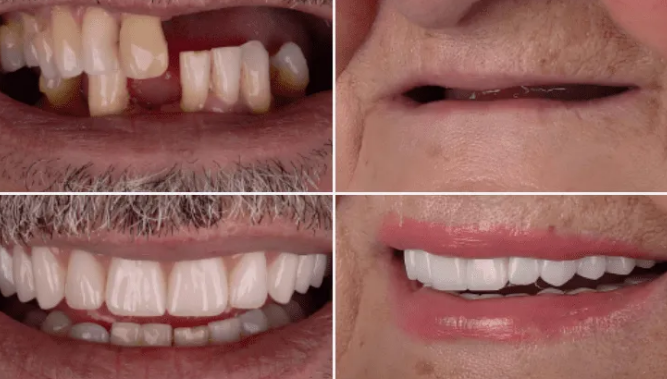

You fixed the missing tooth, but your smile still may not feel finished. That is a common place to land after implant treatment. An implant can restore function and fill the gap, yet the teeth around it may still show stains, uneven edges, old dental work, or shape differences that pull your eye every time you look in the mirror. You are not being picky. You are noticing contrast, and once you see it, it is hard to unsee. Many patients exploring advanced cosmetic dentistry in Boston feel exactly this way after completing implant treatment.
That is why many people look beyond the implant itself and ask what else can improve the overall result. The good news is that several cosmetic treatments can work well with an implant and cosmetic dentist plan. The goal is not to chase perfection. It is to make your smile look balanced, natural, and like it belongs to you.
Dental whitening often helps implants blend with your natural smile
Dental implants do not whiten the way natural teeth can. The crown attached to the implant is made to match a certain shade, and that shade stays the same. If your surrounding teeth are darker from coffee, tea, red wine, or age, the new implant crown may stand out even when the dental work itself is excellent.
Teeth whitening is often one of the simplest ways to create a more even appearance. If whitening is done before the final implant crown is made, your dentist can match the crown to your brighter natural teeth. If your implant is already complete, whitening can still improve the rest of your smile and reduce the contrast. The American Dental Association explains the basics of professional teeth whitening and why supervision matters.
This matters more than people expect. A single implant in the front of the mouth can draw attention if the neighboring teeth are several shades darker or have patchy discoloration. Whitening does not change the implant, but it often changes how harmonious the whole smile feels.
Porcelain veneers can refine the teeth next to an implant
Sometimes the issue is not color. It is shape. You may have one restored tooth that looks strong and clean, while the teeth around it are chipped, narrow, worn down, or uneven. That can make the implant look too perfect compared with the rest of your smile.
Veneers are thin coverings placed on the front of natural teeth to improve shape, size, and color. They can be especially useful when the implant is in a visible area and the nearby teeth need cosmetic support to match. The American Dental Association offers a clear overview of dental veneers, including when they may be a good fit.
This is one of the most effective ways to create symmetry. If you have an implant replacing one upper front tooth and the other front tooth has a different shape or edge length, a veneer can bring the natural tooth into balance. That is often the difference between a smile that looks restored and one that looks seamless.
Dental bonding can smooth small flaws without major treatment
Not every smile needs veneers. If the teeth around your implant have minor chips, worn corners, or slight spacing issues, cosmetic bonding may be enough. Bonding uses tooth colored resin to reshape small areas and soften visual differences between the implant crown and the natural teeth nearby.
People often choose bonding because it is more conservative and usually less expensive than veneers. It works best for modest changes. If one side of your smile has an implant and the tooth next to it has a rough edge or a small gap, bonding can clean that up quickly and help the whole area look more consistent.
Cosmetic treatments with dental implants do not always need to be dramatic. Small changes can have a real effect when they are planned around the smile as a whole.
Gum contouring can improve the frame around the implant
Teeth get most of the attention, but gum shape matters just as much. If the gumline around an implant sits too high, too low, or unevenly compared with the nearby teeth, the result can look off even when the crown is well made. This is especially noticeable in the front of the mouth.
Gum contouring can reshape excess tissue or improve symmetry so the implant sits more naturally within your smile. In some cases, the concern is not cosmetic alone. The contour of the gum can affect how clean, healthy, and stable the area stays over time.
Modern dentistry keeps improving the materials used in crowns, veneers, bonding, and implant restorations. The National Institute of Dental and Craniofacial Research discusses ongoing work in dental materials research, which supports more lifelike and durable cosmetic outcomes.
Comparing cosmetic options that pair well with dental implants
| Enhancement | Best For | Main Benefit | Limitation |
|---|---|---|---|
| Teeth Whitening | Stained or dark natural teeth around an implant | Brightens the surrounding smile so the implant blends better | Does not change the color of the implant crown |
| Porcelain Veneers | Uneven shape, worn edges, discoloration on nearby teeth | Creates strong symmetry and long lasting cosmetic improvement | Requires treatment on natural teeth |
| Dental Bonding | Small chips, minor gaps, slight contour problems | More conservative and often lower cost | Less durable than porcelain in some cases |
| Gum Contouring | Uneven gumline around the implant or nearby teeth | Improves the frame of the smile and soft tissue balance | Not every gum issue can be corrected with simple reshaping |
Simple steps can help you build a more natural looking result
Ask for a full smile evaluation. Do not focus only on the missing tooth. Ask your dentist to assess color, spacing, gum levels, and the condition of the surrounding teeth. A dental smile enhancement with implants plan works best when everything is considered together.
Time cosmetic work in the right order. Whitening often comes before a final crown so the implant can be matched to a brighter smile. Veneers, bonding, or gum work may also be easier to plan before the final cosmetic details are locked in.
Use mockups or photos when possible. If your implant is in a visible area, ask to see shade comparisons, digital previews, or past examples of similar cases. You want to know how the restored tooth will sit beside your natural teeth, not just how it looks by itself.
A balanced smile usually comes from combining treatments with care
One implant can solve a major problem and still leave smaller cosmetic issues around it. That does not mean anything went wrong. It means smiles are made of many parts, and the best outcome often comes from treating more than one detail. Whitening, veneers, bonding, and gum contouring can all pair well with implants when the plan is thoughtful and tailored to your smile.
If you are considering a cosmetic dentist for dental implants approach, ask what combination of treatments would create the most natural result for you. A clear plan can save time, reduce frustration, and help your smile feel complete.