ByJohn A
Pond Fountains: Why So Many Buyers Regret Their Pick
Most people buy pond fountains for one reason. They want the water to look alive. Then the box arrives, the unit goes in, and the spray sits about six inches high while the pond stays green at the edges. That gap between the picture in your head and the thing floating out there is where regret starts. It usually has nothing to do with which unit was ordered.
Buyer regret with pond fountains almost always traces back to a decision made before the purchase. Pond size gets guessed. Power gets assumed. Cable length gets ignored until the day of installation. Fixing any of that afterward costs more than getting it right the first time.
Guessing Your Pond Size Instead of Measuring It
Ask ten pond owners how many gallons they hold. Most will give you a round number they heard once from whoever dug it.
That number drives everything. Pump output, spray height, oxygen delivery, running cost. Get it wrong by half, and the fountain you bought was never going to work.
Surface area matters as much as volume. A shallow pond spread across a wide area behaves differently from a deep, narrow one, even at the same gallon count. Aeration reaches further in the first. Water turns over slower in the second.
There is a pond calculator on the site that handles the math. Enter your measurements, and it points you toward suitable fountain options. Five minutes there beats a return shipment later.
See also: How Technology Is Advancing Environmental Monitoring
Buying Spray Height You Cannot Actually Power
Photos on a product page show the fountain at full display. What they do not always show is what feeds it.
A half-horsepower unit and a three-horsepower unit look similar in a listing thumbnail. In the water, they are not close. The larger one throws a display you can see from across a property. It also needs wiring that matches.
Here is the part people skip. Units at 120 volts plug into a GFCI outlet or a control box. Units running 208 to 240 volts are hard-wired, and that work should go to an electrician. Homeowners can handle the rest of the installation without much trouble, but the wiring is not a weekend guess.
Wire gauge trips up plenty of buyers too, especially on longer runs from the shore. If you are unsure, ask before ordering rather than after.

Confusing Pond Fountains with Pond Aerators
These two get treated as the same product. They are not.
A fountain sprays water upward. Oxygen goes in at the surface, and you get a visible display along with it. An aerator works differently, moving water from the bottom up and circulating the deeper layers where oxygen runs out first.
Which one you need depends on what is wrong with your pond.
- Small decorative pond, mostly about looks: a fountain usually covers it
- Larger water body with fish: bottom layers need attention; an aerator gives
- Nutrient-heavy water, algae returning every summer: circulation matters more than spray height
- Want both: aerating fountains exist and do the job from one unit.
Buy a decorative fountain expecting it to clear a deep, murky pond, and you will be disappointed. That is not a product failure. That is a mismatch.
Ignoring the Anchoring Job Until Installation Day
Assembly is quick. Placement is quick. Anchoring is the part that eats an afternoon.
The unit goes in the deepest section, usually near the middle. Then it has to stay there. You either tether the float to the shoreline or drop cinder blocks and anchor down to them. Neither is complicated, but both take longer than people expect and require planning before the fountain is in the water.
Wind pushes floats. Ice pushes them harder. A fountain that drifts toward the bank looks wrong and stresses the cable.
Forgetting About Winter Before Winter Arrives
Maintenance on pond fountains is light. Flow drops; you check for blockage, usually in the filter screen around the pump. That is most of it.
Cold weather is the exception, and the model you choose decides how much work it creates.
Some units are built to withstand icy winters. Others should come out when temperatures drop hard, or you risk damage that no warranty conversation makes pleasant. Owners who learn this in February rather than October tend to learn it the hard way.
Plan removal into your year. Or buy something built to stay put.
Skipping Lighting Then Wanting It Later
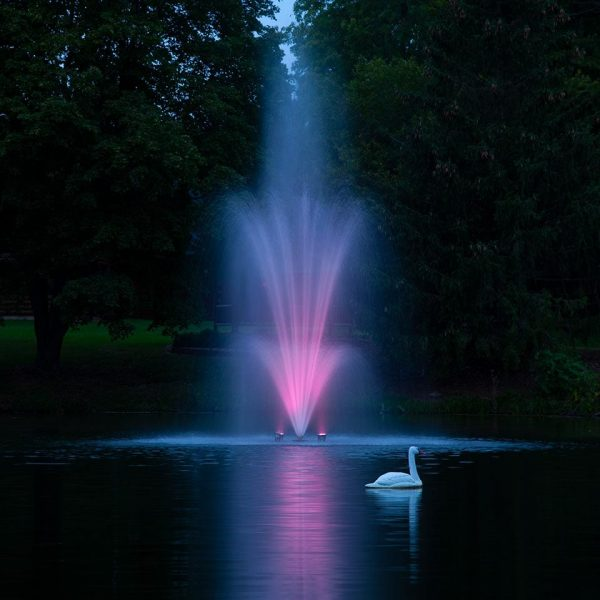
Nobody thinks about lights in June. Come October, when the pond is dark by six, the fountain may as well not be running.
LED kits use little power and last a long time. White, color-changing, remote-controlled, and some programmable to music. They can be bought with the fountain or added separately, and adding later is fine, though ordering together saves a second delivery and a second afternoon at the water.
Perhaps it is a small thing. Most owners who added lights later say they wish they had done it from the start.
What to Sort Out Before You Order
Regret is mostly a planning problem. Handle these first:
- Measure the pond properly, surface area and depth both
- Decide whether the goal is display, water quality, or both.
- Check what voltage you can run and how far the cable needs to travel.
- Confirm your anchoring method before the unit arrives.
- Ask about winter handling for the specific model you want
- Decide on lighting now, not in autumn.
Ready to work through it with someone? Get in touch and talk through pond size, model options, and wire gauging before you commit.