ByJohn A
Why Classroom Audio Matters: The Case for Sound in Every Classroom
It’s tough enough to hold students attention as is, but when they can’t hear clearly, they tune out. During upgrades to AV equipment, the focus is often on interactive displays, video, and monitors. Sound is often treated as a secondary consideration. Yet, instructional classroom audio is critical to student learning.
The right classroom audio solutions help create a more consistent listening environment by distributing speech throughout the room and providing the same quality experience regardless of where a student sits.
Poor Sound Increases Listening Effort
When speech is faint, distorted, or masked by background noise, students must work harder to determine what was said. That extra listening effort can leave less attention available for understanding concepts, taking notes, participating in discussion, and retaining information.
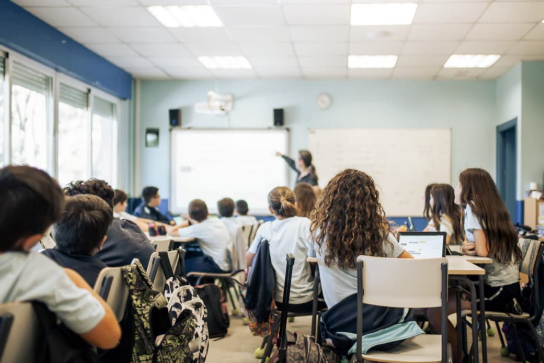
Common classroom conditions can make the problem worse. An instructor may turn toward a whiteboard or display while speaking. Ventilation systems may run continuously. Multiple groups may be talking during collaborative activities, or sounds from hallways and nearby rooms may compete with instruction. It can make for a noisy mess and get in the way of lessons.
Hard surfaces can also cause sound to reflect around the room. Instead of hearing a clear direct signal, students may hear overlapping versions of the same words arriving at slightly different times.
These conditions can affect any learner, including students without a diagnosed hearing condition. A classroom audio solution can help by maintaining more even speech coverage across the room, reducing the difference between what students hear in the front row and what reaches the back, and cutting through background noise.
See also: How Technology Is Advancing Environmental Monitoring
Classroom Audio Supports Equity and Accessibility
Not every student experiences the same classroom acoustics. Distance from the instructor, seating position, individual hearing ability, language proficiency, attention, and auditory-processing differences can all affect access to spoken instruction. Yet, a student’s seat should not determine how clearly they can access a lesson.
A 2025 review published in Frontiers in Psychology found that students seated toward the back of classrooms were disproportionately represented among those who sometimes struggled to hear. The finding highlights an important equity concern:
Academic institutions may need distributed speakers and instructor microphones to help create more consistent coverage across front, middle, and rear seating areas.
Background noise, competing voices, and reverberation create particular barriers for students with hearing impairments. These acoustic challenges can interfere with speech recognition, classroom participation, and access to discussions. Students may need assistive listening devices, captioning, or other accessibility requirements as part of a broader inclusive-learning strategy.
Better Sound Supports Learning
Clearer sound can affect more than whether students hear individual words. It can influence comprehension, participation, and the overall flow of instruction.
Stronger Comprehension and Retention
Students are better positioned to follow explanations when speech remains clear throughout the room. They can distinguish key terms, recognize transitions between ideas, and focus on meaning rather than reconstructing missed words from context. This can be especially important in technical courses, language instruction, laboratory settings, and content-heavy subjects where a single misunderstood term may change the meaning of an explanation.
Consistent audio can also help instructors maintain a natural speaking voice rather than raising their volume throughout the day. That can make lessons sound more conversational and reduce vocal strain, a common challenge for instructors.
Greater Participation and Engagement
Students are more likely to participate when they can clearly hear instructions, questions, and comments. This matters in discussion-based courses, collaborative learning, student presentations, and classes that rely on frequent interaction.
Microphones can support instructors who move around the room rather than teach from one fixed location. Student microphones or strategically placed room microphones can also make peer contributions easier to hear, particularly in larger or flexible classrooms.
More Consistent Hybrid Instruction
Hybrid learning places additional demands on classroom sound. Remote students must be able to hear the instructor along with questions, discussions, presentations, and other activity within the room. This requires integrated microphones, audio processing, and conferencing connections for a more balanced experience for remote participants.
Clear source audio can support more accurate captioning, easier review, and better access for students who do not attend in person or review lecture materials later.
What an Effective Classroom Audio Solution Includes
An effective system should be designed around the room’s size, layout, acoustics, and instructional purpose. A small seminar room may need a simple voice-amplification setup, while a large classroom may require several distributed speakers and more advanced audio processing.
Common components include:
- Instructor microphones
- Student microphones
- Mounted speakers and distributed speakers
- Digital signal processors
- Display and computer connections
- Conferencing platforms
- Assistive listening technology
Instructional classroom audio works best when it is treated as part of the learning environment rather than an accessory added after other technology decisions have already been made.
While integration can get complicated, use has to be simple enough for instructors to operate without technical assistance. Academic institutions will benefit from providing a consistent experience across classrooms, reducing the learning curve for students and faculty.
Equip Classrooms Through E&I and B&H
E&I Cooperative Services is the only member-owned, nonprofit sourcing cooperative exclusively serving education, representing more than 6,600 academic institutions and providing more than 260 cooperative contracts. Through E&I’s competitively solicited B&H Photo Video contract, members can access microphones, speakers, amplifiers, assistive listening equipment, and related technology for building or upgrading a classroom audio solution.
See how you can streamline procurement and achieve significant cost savings through the E&I B&H Photo Video cooperative contract.